Text and images by Screenpunk in collaboration with various AI-agents. April 2026
The State of Post-Authentic Expressionism – April 2026
Post-authentic Expressionism is developing as an artistic practice that explores how AI-generated images can produce emotionally convincing realities. Under the name Screenpunk, this work investigates how artificial images do not simply represent the world, but actively participate in shaping how it is perceived.
At its core, Post-authentic Expressionism is not about authenticity in the traditional sense. It is about constructing images that feel meaningful, even when their origin is synthetic. The question is no longer whether an image is real, but how it operates within a network of perception, memory, and expectation.
Recent Work: Artificial Interventions and Constructed Encounters

The series Pink Elephant was triggered by a real-world controversy surrounding photographer Julia Buruleva, who painted an elephant pink in India and later faced accusations after the animal died. The case raised questions about manipulation, ethics, and the limits of artistic intervention.
Instead of reproducing such an act, the project translates it into a synthetic domain. Using Midjourney, animals are artificially recolored and placed into improbable situations: a blue chimpanzee, a yellow sperm whale, a pink Tyrannosaurus rex.
The shift is subtle but important. The intervention no longer affects physical reality, yet the images still trigger the same kind of response. They appear playful, but also slightly disturbing. The viewer recognizes the manipulation and, at the same time, accepts it.
This reflects a broader condition: images no longer need to be real to have consequences. Their effect operates at the level of perception.
Social Scripts: The First Date as a Generated Situation

In the First Date series, the focus moves from intervention to interaction.
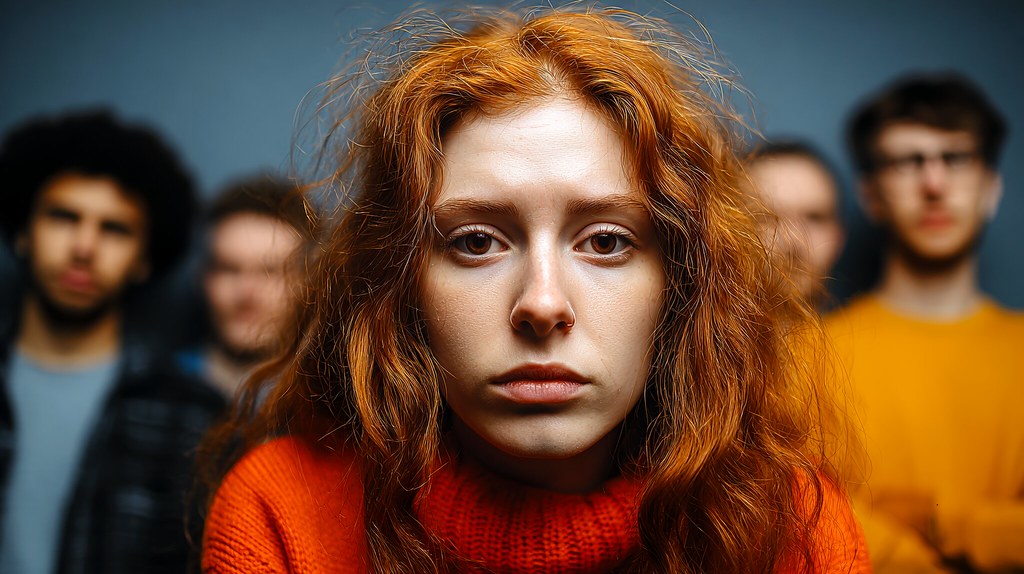
The images depict staged encounters between two people meeting for the first time. These are familiar situations, structured by expectation and uncertainty. What is explored here is not the event itself, but how it is visually constructed.
Small differences—clothing, posture, distance, environment—change how the scene is interpreted. A slight shift in tone can turn the same situation into something promising, awkward, or unsuccessful.
These images function as variations of a single script. The individuals change, but the underlying structure remains. The outcome, notably, tends toward disconnection. The meeting does not lead to continuation.
The work suggests that social experience is not only lived, but also shaped by recurring visual patterns.
Perceptual Regimes: Structuring What Can Be Seen
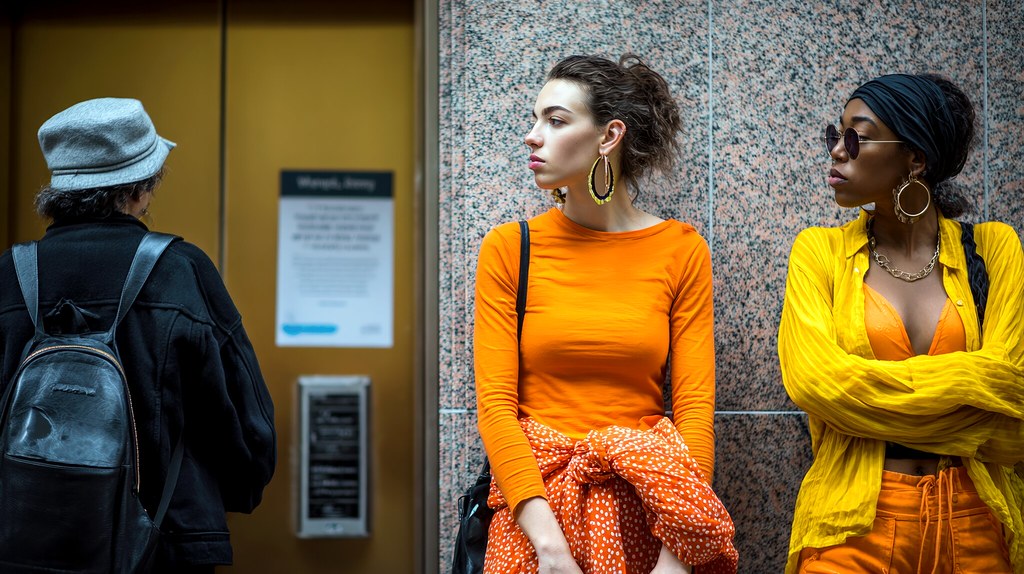
A key development in this phase is the introduction of perceptual regimes.
A perceptual regime is a guiding framework that shapes both the generation and the reading of an image. It operates before the image is made, influencing what becomes visible and how it is interpreted.
In the First Date series, class consciousness functions as such a regime. It subtly informs the environment, the styling of the characters, and their interaction. The result is a set of images that feel coherent, even when the subjects differ.
This approach shifts the focus away from isolated prompts toward structured perception. The image becomes part of a system rather than a standalone output. More on this can be found in Perceptual Regimes.
Looking forward

The next phase focuses on extending perceptual regimes into more structured and continuous projects.
One direction is The History of Image Reproduction, where different historical phases—ranging from singular images to mass reproduction and AI-generated imagery—are explored as distinct perceptual regimes. Each phase is not only described, but visualized. The aim is to understand how images have shaped perception over time, and how current image generation fits into that trajectory.
At the same time, ongoing work on Rhizome Cities, published on Flickr, explores how perceptual regimes can be applied to speculative environments. These images focus on futuristic, eco-friendly urban structures that grow, branch, and connect like living systems. The emphasis is not only on architectural form, but on generating ideas—cities as evolving networks rather than fixed designs.
Across both projects, the role of the perceptual regime becomes more explicit. It is no longer just a guiding lens, but a method for constructing sequences, systems, and possible futures.
The aim is to move beyond isolated images toward bodies of work that suggest development over time—images that do not just represent, but accumulate into something that begins to resemble memory, history, or speculation.