Text and images by Screenpunk in collaboration with various AI-agents. August 2026
Knowledge has always been humanity's most sophisticated method of mistaking its own inventions for reality. Plato suspected that the visible world was merely a shadow of something more substantial. Kant argued that the mind imposed its own conditions on experience, while Nietzsche suggested that truth might be a collection of metaphors that had forgotten their literary origins. Screenpunk finds all three positions reassuring, particularly since artificial intelligence has now learned to produce convincing images of things that have never existed.

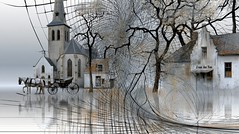
In Knowledge Systems, the distinction between knowing and seeing becomes increasingly unreliable. Human faces dissolve into competing interpretations, thoughts acquire architectural ambitions, and entire landscapes appear to have been constructed from beliefs that nobody remembers adopting. Perception, once considered a reasonably innocent activity, reveals itself as a highly organized conspiracy between the senses, memory, language, and whatever ideology happens to be supervising the proceedings.
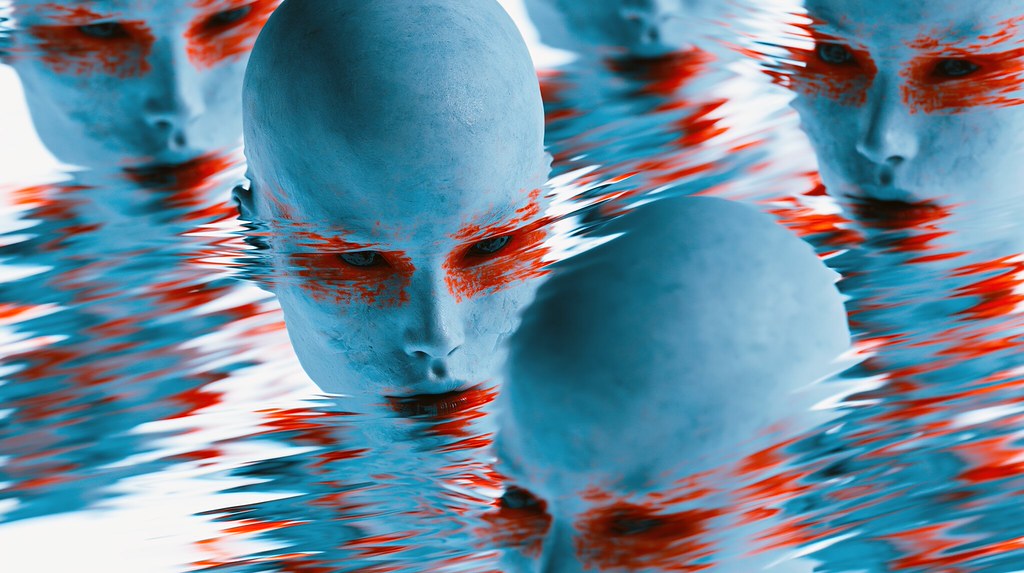
Baudrillard suspected that representations might eventually replace the realities they were supposed to represent. Generative AI has introduced an interesting complication: the representation no longer requires an original. Screenpunk considers this a considerable improvement in efficiency. Why go through the trouble of establishing reality when an image can produce the experience of one without the inconvenience of its existence?

The images also raise an uncomfortable question about authorship. If an artificial intelligence generates an image from patterns accumulated across millions of human expressions, who exactly is doing the imagining? The artist, the machine, the collective visual memory of humanity, or some previously unemployed entity residing between them? Screenpunk prefers not to settle the matter. Uncertainty is one of the few artistic resources that cannot yet be exhausted by automation.

Perhaps knowledge systems do not reveal the world at all. Perhaps they manufacture the conditions under which something can appear to be a world. Science calls this modeling, philosophy calls it epistemology, and Screenpunk calls it an excellent reason to generate another image.
The investigation remains inconclusive. Reality has been invited to defend its position, but has failed to provide independent evidence of its existence.


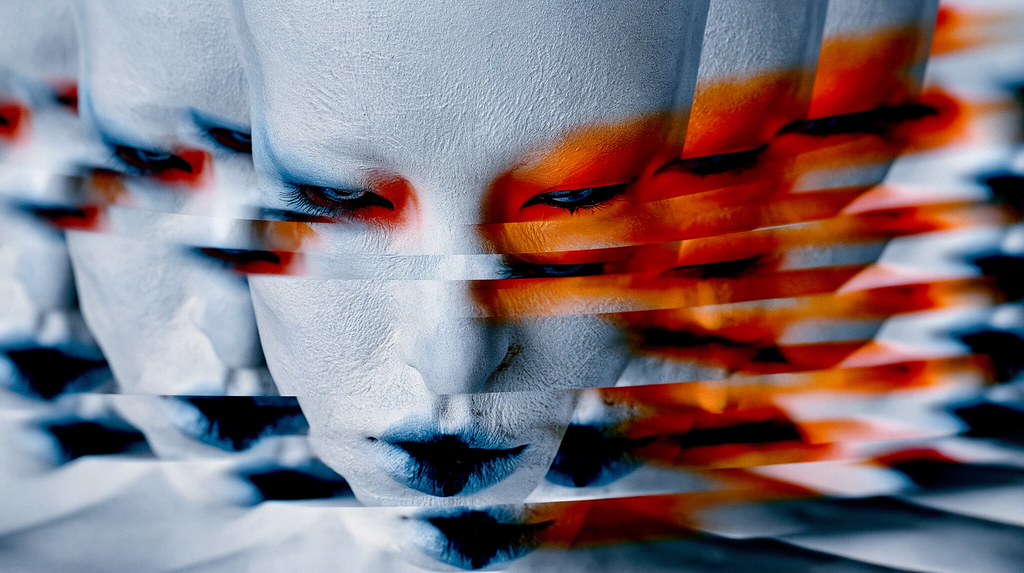

“The sacred is what survives our sarcasm.”